We’re continuing our Spotlight of holiday themed shorts with a short film from Belgium, which was nominated for an Oscar in 2008. “Tanghi Argentini” or “Argentine Tango” is a film directed by Guy Thys and written by Geert Verbanck, that tells the story of André, a middle aged office worker, who makes the age old mistake of lying on an online dating site to impress a girl. When André strikes a date with a Tango aficionado, he must convince Franz, a co-worker who’s the cross between Ebenezer Scrooge and Yul Brenner, to school him in the art of dance.
The first thing you might notice about the film is the muted color palette. Blacks, greys, and whites dominate most of the scenery. Very rarely do we get a green from a Christmas tree in the background or yellow from the sun shining through a distant window. This seems to highlight the drab and boring existence that is André’s life. Even Franz, who is supposed to be sparking the passion in him, is dressed like he’s going to a funeral most of the film. The first time we really ever see a noticeable change is when André shows up to his date wearing a red rose in his lapel.
This is all very deliberate, as we are finally introduced to André’s date, Suzanne, in a striking red dress and sultry lipstick. This sudden injection is a great example of how color can be used as a kind of subtext in film. In this case, red can be representing André’s passion, as it has finally begun to flourish with his learning the Tango. Suzanne, on the other hand, is practically brimming with it, as she represents André’s escape from his colorless life.
Something else to note is the lighting. “Tanghi Argentini” is lit very similar to a film noir, with dim lights casting hard shadows. This gives an air of mystery to the film, possibly suggesting that not everything is as it seems.
Like many good shorts, “Tanghi Argentini” does take an unexpected twist, the kind that will have you going back to the beginning asking, “How did I miss that?” As good as the story is, I think the best thing to take away from the film is how Thys uses lighting and color to visually guide us through the story. This has been used to much effect in films such as Shindler’s List and The Sixth Sense. Filmmakers should take note on how “Tanghi Argentini” again proves how good cinematography can be used to tell a story just as dialogue can.
This week JJ Abrams released the teaser trailer for Star Wars VII: The Force Awakens and just like every other fanboy I watched the video over and over, often pausing to pick out even the most minute details. My dissection of the trailer was handled with the same level of precision as a group of Spaceballs with an giant fine-tooth comb. I mean this is JJ Abrams we’re talking about here. The guy who made Lost. Do you know how many Easter Eggs he snuck into that series?
Of course I wasn’t the only person with their eye on the trailer and it didn’t take long before people shared their discoveries and doubts to social media. It took no less than ten frames before some members of the Star Wars fan base had a collective head burst. The scene I’m talking about is the one that opens the trailer, where we see a stormtrooper with his helmet off, looking out into the distance with fear in his eyes.
Oh yeah, and he’s black.
The amount of outrage over this stormtrooper’s race has been well documented over Twitter and other social media outlets under the hashtag #blackstormtrooper. Although most is overwhelmingly positive, some try and point out the supposed “inconsistency” of his race due to the fact that stormtroopers were shown to be cloned from Jango Fett in Star Wars Episode II: Attack of the Clones:
Still others believe this is an attempt to appease the “PC lovers”, “Social Justice Warriors” or whatever other term kids are using these days to describe people who want to see women and minorities in films because they exist in a place we call society, just a small subset of the universe:
Anybody notice how JJ Abrams immediately checks the diversity boxes in the teaser for the new Star Wars movie?
How this is still an issue is beyond me, although I’m sad to say I’m not surprised. I was under the assumption that science fiction had moved beyond this nonsense decades ago. Duane Jones was cast in a starring role in a major Horror/Sci-Fi film in George A. Romero’s Night of the Living Dead. That was in 1968, the same year Kirk kissed Uhura. Also, I don’t remember anyone accusing George Lucas of checking “diversity boxes” when he cast Samuel L. Jackson as Mace Windu in 1999. It’s 2014, a black stormtrooper shouldn’t be considered progress or pandering, it should be considered the norm.
That’s not to say the scene doesn’t mark a historic moment in the series. Go back and take a look at that scene.
There is definitely something striking and out of place about this stormtrooper that has nothing to do with the color of his skin.
Look again.
It’s his expression, or better yet, the fact that he has an expression at all. Provided this is truly an Imperial Stormtrooper, JJ Abrams has done something that has never been done in the Star Wars universe. He’s humanized a stormtrooper.
Stormtroopers have traditionally been portrayed as a cookie cutter military outfit. Their uniforms are monochrome, without any semblance of coloring. No personalization, like stickers. No nametags. Their appearance is skeletal, the most stripped down our bodies can be while still maintaining their shape. Their voices are monotone, devoid of any kind of inflection. Even when they’re introduced as Jango clones, they are portrayed as mindless copies unlike the strong-willed Fett. For all intents and purposes, stormtroopers are meant to be mindless automatons, lacking any modicum of emotion or marksmanship.
There’s a reason for this in filmmaking, particularly Science Fiction, Horror and even some War and Western films. Things like zombies, robots, ninjas, orcs, brood-like aliens and the like are meant to be devoid of any humanizing features. This is so heroes can easily shoot and slash through swaths of enemies without eliciting an emotional response from audiences. It’s what differentiates Starship Troopers from becoming the sniper scene in Full Metal Jacket.
This method is used to great effect in the Star Wars franchise as the Empire is often depicted as masked or cloaked in battle, but the Rebels’ faces are exposed and possess features that make them unique. As an example take the first assault on the Death Star. On one side you have the the Imperial TIE Fighter Pilots, completely concealed in black helmets. Yet all the rebel pilots, from Wedge Antilles to my favorite, the portly Jek Tono Porkins, have their faces visible.
During the battle, no one cares as TIE fighters are blasted into particles, because they might as well be piloted by Death incarnate. But audiences feel for guys like Porkins as we witness him meet an untimely death as he sizzles (heh) among the stars. Porkins speaks with authority, we can tell he’s respected among his squadron and he sports a rocking neck beard. And for those of you wondering, yes, Lucas really named the heavy guy Porkins. (This was just to illustrate that Lucas humanizes his characters, not that he’s good at it.)
It’ll be interesting to see if Abrams is planning on giving the Empire a human side. It’ll certainly change the way we look at the Empire as well as explain the motivations of those within their ranks. Furthermore, it might reveal that there’s more than one side of the story when it comes to the battle between the Galactic Empire and the Rebel Alliance. Perhaps like most rebellions the outcome didn’t turn out as planned.
Whether you love them or hate them, one thing’s for sure, holidays are right around the corner and there’s nothing you can do to stop them. For the next month leading up to Christmas I’ll be spotlighting select holiday themed shorts for your viewing pleasure. For our first freakishly festive film I give you “Dark Times”, directed by Peter Horn and Jared Marshall, a tight five-minute short shot completely in the first person.
The directors’ choice to shoot POV gives this film a feel like being on a Disneyland ride. Try to imagine Star Tours set in a zombie apocalypse during Christmas time and you’ll get a good idea of what I’m talking about. The tight running time combined with the shaky cam really amp up the pace of this film.
Another interesting aspect of the film is how quickly we’re thrust into the action. There is no introduction of characters. The film simply doesn’t have time for it. We follow a man, we can only assume is a friend of ours, through a dark forest evading the undead and the like. As we continue through the mayhem that ensues, we are introduced to other zombie apocalypse tropes we have come to expect from the genre. The filmmakers even spare us the end credits as if to protect us from anything that might bog down the fast pace of the film.
An interesting thing happens about halfway through the film that changes the mood and pacing. I won’t give it away, but watch how Horn and Marshall play with our perspective by use of color and camera movement. Those familiar to first person gaming will recognize some of the tricks the directors use, which lead me to believe that Horn and Marshall have probably played their fair share of Call of Duty. Really, this could make a pretty good video game trailer.
Those of you looking to pick up some tips on pacing should give this one a view. “Dark Times” relies on zombie fandom and knowledge of the genre to tell most of the story for us. What’s left is an interesting study on the many ways POV can be used in film.
I understand filmmaker’s concerns with protecting their scripts. Sometimes it’s to keep an ending secret till it hits festivals. Sometimes it’s the fear that someone with immediate resources will take their story and proceed to production before they do. It’s certainly possible that either of these scenarios could occur, but the less known you are, the less you have to worry about this happening.
Now, I’m not saying you should post a copy of your script every Starbucks bulletin board in hopes some visiting producer will read it while he waits for the barista to finish his gingerbread latte. You should take all the precautions you can to protect your work. What bothers me is how anal writers and filmmakers get over keeping their scripts a secret, yet they have no problem blurting out the entire plot of their film before the script is even written.
Let me set the stage for an example:
You’re at a party with other filmmakers maybe discussing what the best Coen movie is (Barton Fink) or which has the best universe Star Wars or Star Trek (Battlestar Galactica). Eventually someone, probably six PBR’s deep at this point, asks what you’re up to and you begin to describe your film career. Not to be outdone, your new friend begins to tell you about the idea he just came up with for the perfect film. It could be anything, but it’ll almost certainly involve aliens and a twist at the end that is totally different than a million other movies because this one has aliens.
Too many people seem to have no problem discussing with complete strangers future films they have absolutely no ownership over, while sparing no expense at protecting scripts they already have copyright over through simply writing them. Nothing is stopping someone from stealing an idea. Ideas are not yours.
Hell, I’m convinced I came up with the idea The Wrestler. It’s a great film, I know, I invented it in my mind. The only difference was in my film it was a boxer and the budget was $120 because that’s all I had in my account. For all I know whoever wrote that film was sitting in the Denny’s booth behind me at four in the morning while I regaled my friends with my million dollar idea in one of my many whiskey induced tirades.
Yeah, it was pretty much this.
There’s nothing wrong with telling your new film idea to your friends, your family or whomever you have a long-term, genital-rubbing relationship with, just make sure you can trust them. Remember, screenplays are tangible. Ideas are not. You can’t claim thoughts.
It should go without saying that there are different types of writing. We all seem to instinctively know the difference between a poem and a novel even if we have no understanding of the structural differences between the two. Yet, yet when it comes to screenwriting there is one thing I notice many filmmakers misuse in their scripts that really doesn’t do any kind of service.
Narrative.
What is Narrative?
Narrative is really any sequence of words or pictures that tell a story. Your film is most likely a narrative and the way you edit it together results in a cohesive story. The same goes for writing, the way you combine a sentence like “Bill reached down, picked up the big stick and threw it to his dog.” tells us enough about Bill, a stick, his dog and how they are all connected to envision it as a story. Now keeping with the three subjects but changing it around, “There is Bill, a dog and a big stick in the air.” really doesn’t tell a story as much as just describes what’s objectively present.
Or should Bill throw me a ball? Seems more poetic.
How It’s Used Incorrectly In Screenplays
Although a film in its entirety works to create a narrative, the narrative I’m specifically referring to is the type that takes place in the “Action” element or narrative description of a screenplay. It’s the big, block of words that you probably skim through quickly to get to the dialogue. It stretches from margin to margin rather than kept to the center of the page like dialogue.
An example would be:
Suddenly there’s banging and growling at the gate. The group huddles into the corner. Chad aims his gun at the gate. Suddenly, the banging stops. Chad turns to Bernie. He speaks to him slowly, like you would a child.
CHAD
Are you ok?
BERNIE
I’m not deaf.
SHILOH
What were those things?
CHAD
I don’t know.
What some writers don’t realize is that there are certain narratives that specifically don’t read well on film. In regards to acting, narratives describing the past or the internal emotions of characters oftentimes are worthless because we can’t show those types of things. It’s important to make sure that all narrative is, what is sometimes referred as, “Actable”, or in other words, something that an actor can physically portray and strays away from exposition or what the character is thinking.
All you mimes know what I’m talking about.
Actable vs. Non-Actable
Novels read much different from screenplays for the simple reason that they are written be read, not acted out. In them, the writer often must describe the feelings or past situations of a character to tell the whole story. It is not uncommon to read a line like, “Danny loved cheesecake. Every Christmas Danny would make help his mother in the kitchen, preparing the crust as his mother mixed the cheese and milk. It was his fondest memory of her. Since then, every cheesecake he ordered, in every town he visited, was his way of honoring her memory.”
This sentence makes plenty of sense and tells the story of Danny, his mother and why he loves cheesecake. In a novel that requires our imagination to fully envision the story this type of description is fine, but if we were to film this scene we could only do so in pictures or have it explained within the dialogue. There is no way you can expect an actor to portray this. I don’t care how good of an actor someone is, there is no way you can act out cheesecake being your “favorite” food. You can act out that you enjoy a cheesecake (commercial actors specialize in this), but to act out that level of detail is simply impossible.
Still there are many scripts I read where a writer takes up six to seven lines of action to describe something like a character’s look that’s a result of his father’s physical abuse toward him that haunts him to this day, forcing him to punch kittens on the weekends etc., etc. In the attempt to describe a pivotal event in the character’s life, the writer spends an unnecessary amount of time and space on a page writing out something that can’t be filmed.
How this Effects Actors
I previously joked about how the Action element is the part of a script many people skim over to get to the dialogue. If there is any person that is going to pay a load of attention to this these sections it’s going to be the actors, because it tells them what they’re going to do. There are many actors, especially seasoned ones, who recognize non-actable narrative as useless and frustrating.
As someone who used to act long, long ago, nothing brought me greater joy then to connecting with a character written well, namely because a good script makes for a good production and I was a horrible actor. Now on the other hand, if you give a good actor a well-written character, the result is almost always a thing of beauty. So imagine how an actor must feel when a writer has created a great character, but has given them nothing to work with. It’s like handing someone a million dollars that they can only spend on socks. Sure socks are great and all but the best things are just out of reach, like high-powered sports cars and sex toys.
Yep, this is a real thing.
Actable narrative isn’t really hard to recognize. A good rule of thumb is to go by the “show, don’t tell” rule of writing, keeping in mind that filmmaking literally requires us to show things to an audience. You could also ask an actor to go over your script to point out anything that isn’t actable. Most importantly though, always keep in mind that film is a visual medium and that a script should always be written to represent that.
In 2009 Jenny Slate was fired from Saturday Night Live for a slip of the tongue. Despite SNL producing a number of controversial skits, there are some words you simply can’t say on network TV at 11:30 at night. This one happened to start with “F” end with “G” and rhymes with “sucking” which SNL can be from time to time.
Since then Slate has been seen in just about everything from Parks and Recreation, House of Lies, Brooklyn Nine-Nine and the recently amazing Obvious Child. Apart from her success in TV and Film, Slate and her husband, Dean Fleischer-Camp, have made a number of short films together including the popular and heart melting “Marcel the Shell with Shoes On“. “Self Esteem: Jenny Slate” is another one of their many short film contributions directed by Fleischer and starring Slate. It’s a film that shows the dichotomy between expectation and reality as a group of mysterious onlookers watch and comment on Jenny Slate’s life. Like “Marcel The Shell”, “Self Esteem” manages to be humorous and heart breaking at the same time.
What particularly struck me about “Self Esteem” is the usage of conflicting visual and audio elements. In it, we never see the onlookers who are clearly enamored with Slate and spend the whole film speculating on how amazing it must be to be her. In contrast, we have Jenny Slate, who says virtually nothing. Through subtle looks and actions Slate shows the audience the reality of her life, which is often in direct conflict with her onlookers observations. Through voiceover “Self Esteem” creates an unreliable narrator in the onlookers while Slate’s actions convey her true story to the audience, presumably unbeknownst to her. What results is a film that manages to address how the expectations put on us can belie the realities we face everyday while also managing to comment on the dangers of putting people of fame on a pedestal.
This mixture of contrasting audio and video has been used to varying degrees in film. David Lynch relied on it heavily to jar the audience in his film Eraserhead. In other films, music can been chosen to conflict with the feelings audiences commonly experience when viewing scenes of extreme violence like in Reservoir Dogs.
Audio doesn’t always have to complement a film. Sometimes by deliberately choosing what we hear to conflict with the mood of what we see, a filmmaker can explore complicated scenarios without any one character actually addressing it. What results is a film that interacts with the viewer, relying on their senses to connect with the underlying message rather than telling it outright. As an experiment, try watching “Self Esteem” on mute. Note how the message of the film is lost without the onlooker’s constant narration. By doing this you may get a better understanding of how audio and video can work together to tell a story.
I remember back when I was growing up that the rule was if you had a successful TV show you had to follow it up with feature film. This is apparent in films like The X-Files, Police Squad!, Firefly, Sex and the City. The list is endless especially considering that we still haven’t left the age of giving every possible old TV show a modern film remake (did we really need a Mod Squad movie?)
But it would appear with in this new golden age of TV that things are beginning to reverse. It’s becoming more and more popular to take movies (some released as early as 2002) and give them the full television treatment. Although this is nothing new, (M*A*S*H* was a film that spawned a TV show) the list of TV shows based off films coming out within the next 2 years is pretty extensive.
This year I caught two such series. Fargo, an amazing series that garnered an Emmy for Outstanding Miniseries and From Dusk Till Dawn, which is a TV show based off a film.
This got me thinking about what movies I would like to see as a TV series as well as some casting choices to fill their most iconic roles.
Star Trek: The Next Next Generation
Ok, before I get my Platinum Nerd card taken away from me, yes I’m perfectly aware that Star Trek was a TV series before it was a movie and that there actually is a new Star Trek series that tries to capture the look and feel of the original. But I argue that since JJ Abram’s rebooted the series it’s through that continuity that a new series should be born and what better way than through The Next Next Generation.
Whether die-hard Trek fans like it or not, the Abrams films are highly popular, and as such, should be the new direction of the series. What makes the idea of a rebooted TNG so appealing is that it can continue on from the timeline that Abram’s has created while simultaneously explaining some perplexing things that I feel exist in the new films.
Like for instance, what the hell is this?
Not an android!
That’s 0718 a Lieutenant that served on the USS Enterprise in Star Trek: Into Darkness. It has been explained that 0718 is NOT an android or a robot, but a human who integrated himself with cybernetic parts and coincidently changed his name to a model number, because that’s not at all common of androids or robots.
It seems clear to me that these new films have a heightened level of technology that simply didn’t exist in the original series like the ability to teleport from planet to planet and resurrection blood. It would stand to reason that these new technological advancements should have an impact on characters like Data who appear 70 years after the last voyage of Kirk and his fleet.
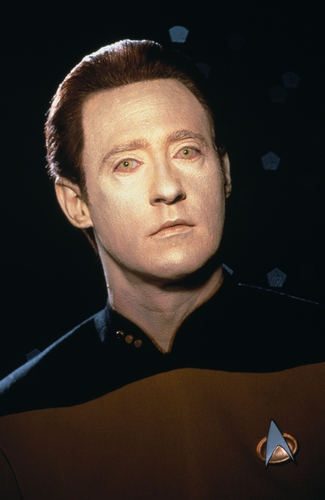
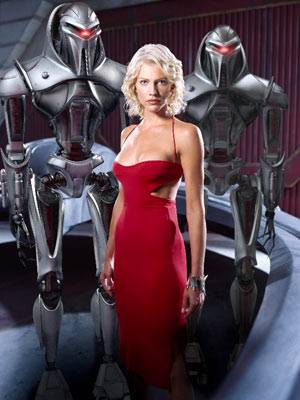
This could open up all new story possibilities. What could result is a future where technology can create a Data that is virtually indistinguishable from actual humans. Data’s interactions with others would present a new conflict in a world where the definition of humanity is blurred. Furthermore, his search to become more human and less android could take new turn if people were threatened by the possibility of his kind replacing them someday.
Think less this:
And more this:
In this future the threat of technology is more apparent as a result of Scotty creating new warp systems and the synthesizing of Kahn DNA.
Who should play Picard?
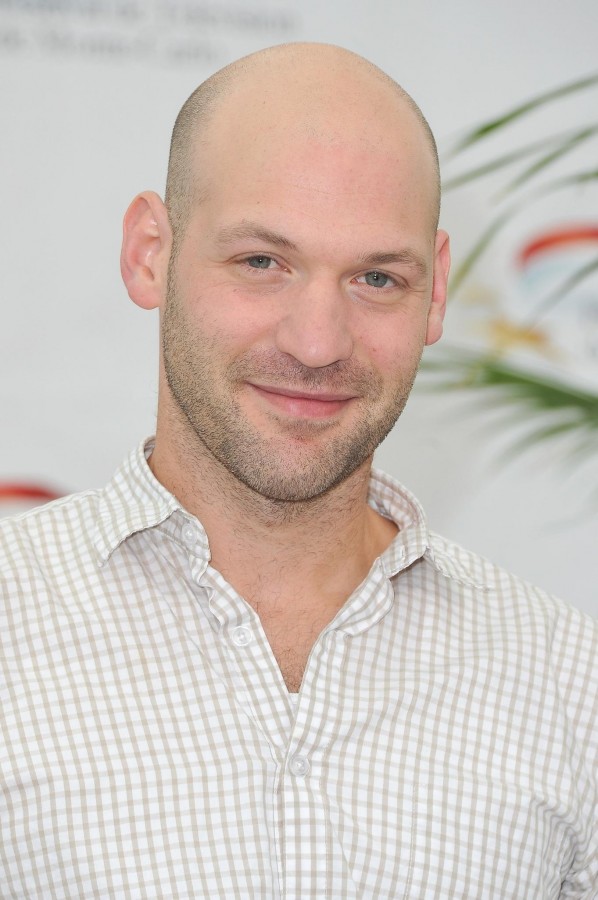
For me the answer is simple. Cory Stoll.
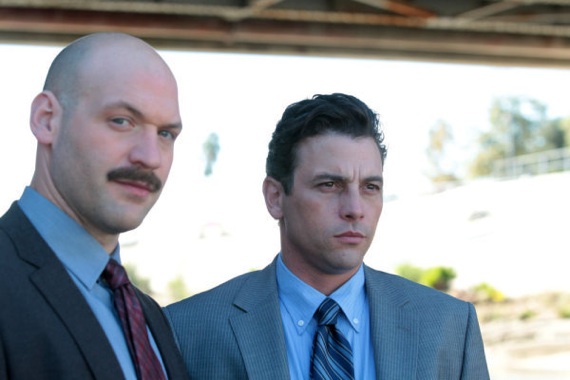
Cory Stoll isn’t particularly well-known, but he has an impressive resumé. You may know him from the ill-fated Law and Order: LA where he murdered Tom Selleck and stole his mustache.
But you film fans probably recognize him most from his portrayal of Ernest Hemingway in Woody Allen’s Midnight in Paris.
Make it so.
In my opinion Stoll can bring just a little swag to Picard that modern fans of the movies will appreciate. I mean why should Kirk get all the green chicks? Maybe we can finally have a Picard who’ll forgo tea time and make a damn move on Beverly Crusher already.
The Legolas Power Hour
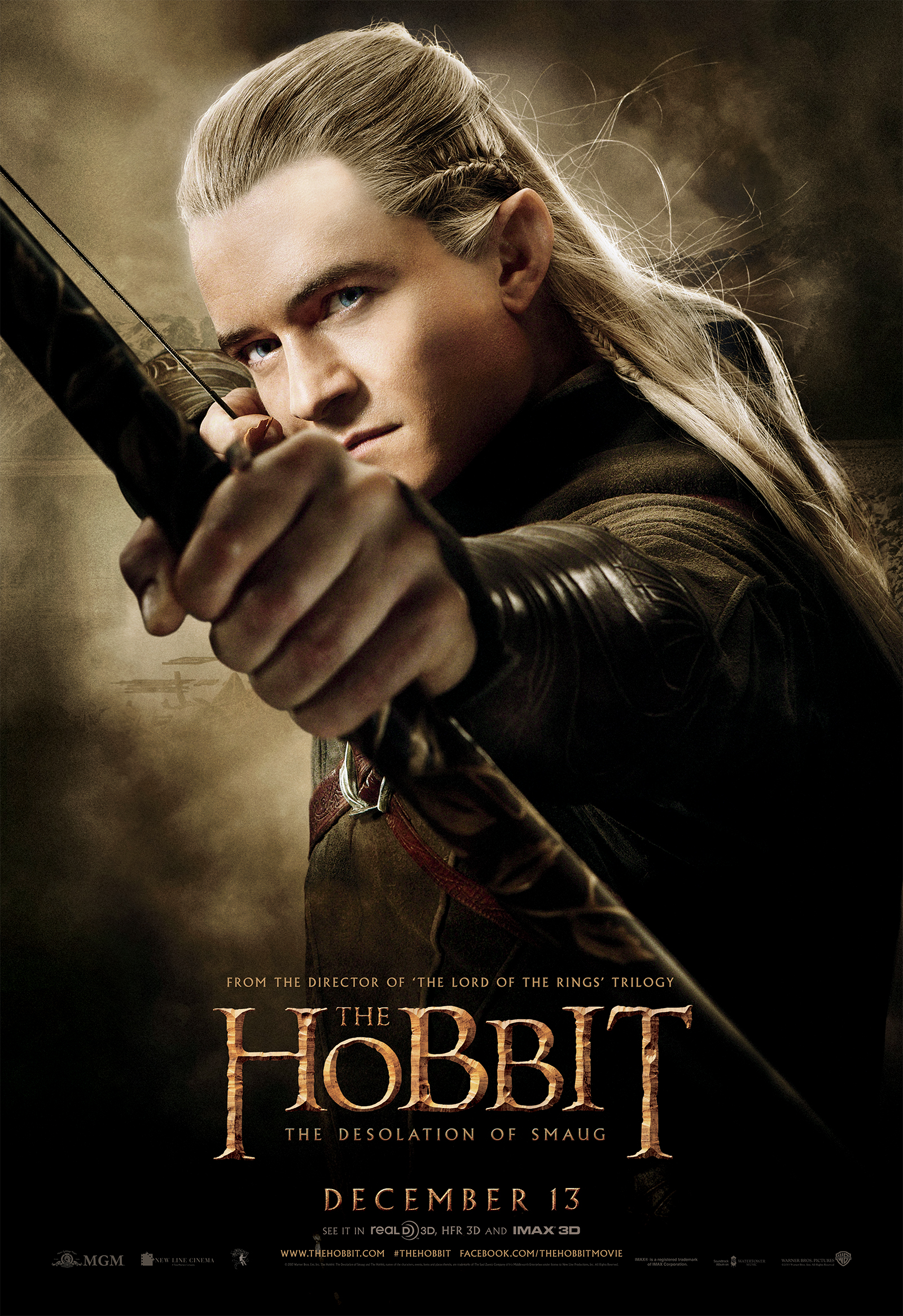
I don’t care how many people claim to hate Legolas, the fact of the matter remains, when a giant battle sequence occurs in any of The Hobbit/Lord of the Rings films every subconscious in that entire theater is begging for Legolas to show up. You know it, I know it and more importantly Peter Jackson knows it. Why else would he include him in the new Hobbit films, complete with his own storyline?
Let’s be honest, as hilarious as it is to see a Gimli repeatedly herpa derp his way across a battlefield, the joke can wear thin after a while. The real excitement comes from that volley of arrows expertly aimed through eyes so deep you want to swim in them. Don’t lie, you felt it too.
Shhh, I hear fanboys calling.
What I propose is a retelling of the entire events of The Hobbit and LOTR in a series of hour-long television episodes told through the eyes of our favorite arrow-slinging elf. This would allow Jackson to accomplish two things that he didn’t manage to pull off in the films.
One, create a series that encompasses every possible scenario from the books, no matter how inconsequential.
Two, manage to jam Legolas into every possible frame.
By my calculations, I predict Jackson will be able to accomplish this in just under 17 seasons.
As a child one my favorite movies was John Carpenter’s Big Trouble in Little China. It had everything an American kid could ask for in the 80’s. Jim Henson-like puppetry? Got it. Martial Arts? All day. To top it all off it’s told from the perspective of a tongue in cheek, all-American braggart by the name of Jack Burton who’s the combination of John Wayne, Indiana Jones and Ash Williams all rolled into one. Despite all of this, Jack is not the most capable character in the film; that honor goes to Wang, whose girlfriend is kidnapped, spurring on the conflict. As a result, Jack is really just the sidekick of a high-flying, confident, ass kicking asian, making the film like Green Hornet in reverse, but with monsters.
What’s interesting about the film is that its structure leaves something to be desired. Even as a kid I was curious how all the characters seemed to know each other. It’s clear from their opening scene that Jack and Wang are close friends who both possess take no shit attitudes. One would assume that these two couldn’t have possibly have gotten along unless their friendship was forged in fires of countless adventures. Even Eddie, Wang’s friend, mentions how much Wang talks about Jack. Beyond that, Wang knows Gracie Law, a lawyer (obviously, her name is Law) who has a reputation for getting into trouble. Gracie is clearly close to Wang and his family, as shown early in the film when she walks right through the backdoor of the Wang family restaurant without anyone so much as raising an eyebrow. Not to mention everyone in Chinatown knows Egg Shen, a man with mystical powers whose name Carpenter clearly got off a Chinese take out menu.
The point is, everyone in this film has history together and none of it is ever explained.
What I propose is a television series that focuses on the origin of Wang and Jack’s friendship and the adventures that follow. The pilot could involve Jack making a routine delivery to San Francisco in his infamous truck, “The Pork Chop Express”, where he meets Wang for the first time. From there, Jack’s job as a trucker can allow the two to go from state to state, righting wrongs and saving the day.
But here’s the kicker.
In following with the theme of the movie, although Jack is driving the truck and the story, ironically he’s just along for the ride. All of the conflicts the two face will be a result of Wang’s sense of justice and his need to do right, as where Jack only goes along to fulfill his own self-interests (eg, Money, women, ego, The Pork Chop Express).
Who should play Jack Burton?
Who could possibly follow Kurt Russel? It’s like his entire face is just one giant cocked eyebrow. The guy started his career playing Elvis for god’s sake… at age TEN!
Luckily though, I managed to use some of those top-notch researching skills I learned in college to find a replacement. By Google searching images of “All American Actors” and carefully deliberating for five seconds, I finally settled on the fifth or sixth picture down.
Behold, I give you Adam Mayfield!
Who is he? I’m sure that’s a question Adam’s agent is still trying to answer. He used to be on All My Children and most recently some series with Tori Spelling and Jennie Garth, that’s absolutely not 90210. Other than that, his only claim to fame is that a virtual nobody with a film blog just named him the new Jack Burton. Don’t believe me? Check out this Taco Bell commercial.
Look into that man’s furrowed brow and tell me you don’t want a quesadilla. He’s a perfect fit, because much like that quesadilla Jack Burton’s entire being is held together by one key element, a whole lot of cheese.
Filmmakers make shorts for all kinds of reasons. Sometimes it’s to showcase their abilities on a small budget or win festival awards in a shorts category. It may even be because they have a compelling story, but it simply can’t be stretched out to 120-minutes. Still, some filmmakers use shorts as a way to pitch a potential feature-length film to audiences and investors by presenting it to them as a short for a fraction of the price. This can prove to be quite effective in that it allows viewers a chance to get a better feel for the full film by presenting it in the medium it’s intended for. Films like Saw have used this method of pitching to much success as their original short film has spawned an entire franchise.
One of my favorite horror movies of the last year was Oculus, directed by Mike Flanagan. The film particularly struck a chord with me because it relied heavily on psychological fear and suspense, a la The Shining, rather than the blitzkrieg of gore and jump-out-of-your-seat moments common with horror films nowadays. Even more impressive is that it’s a wonderfully shot film made for the low, low price of $5,000,000.
Much like Saw, Oculus started out as a 30-minute short entitled “Oculus Chapter 3: The Man With the Plan” (and yes, I did search for chapters 1 and 2 to no avail. They don’t appear to exist). Although it was never Flanagan’s original intention to pitch a feature film, the short managed to create enough buzz to attract studios interested in turning it into a full-length film.
The film is simple enough, using a simple white room as its only location and really only starring one actor (if you don’t count the pair of delivery guys who are on-screen for 30-seconds). Much like the feature, “Oculus Chapter 3: The Man With the Plan” relies on psychological fear and clever usage of audio to create tension. The rest of the film is purely expositional as the main character, Tim, tells us the history behind the mysterious Lasser Glass as well as his history with it. By keeping things simple, Flanagan managed to keep the budget of “Oculus Chapter 3” to around $1,500.
Those familiar with Oculus the feature will see similarities in plot in “Oculus Chapter 3”. What’s interesting to note is what was changed in its transition from short to feature. Originally, studios wanted Oculus to be a “found footage” film not unlike The Blair Witch Project or VHS, but Flanagan felt that route would destroy the concept of the film.
He had this to say:
“And kind of immediately, as it got out into the festival circuit, people were enjoying it and there was interest in expanding it into a feature — but everybody wanted to do the found footage thing because there was cameras in the room. And I didn’t think that worked for this story because the only thing that really is going to make it work is if we can say that what you’re seeing on the screen isn’t objective. Found footage has to be objective. You have to believe the frame.”
I couldn’t agree more with this. One of the most original things about this film is the ability to create fear around, what essentially is, an inanimate object that you can coincidently buy for $409.90 here if you want to scare the piss out of your visiting guests.
As the short film shows, by incorporating a sense of distortion by the use of editing and sound, the fear in “Oculus Chapter 3” comes from the journey the audience has with the protagonist as our senses are tested and we begin to lose faith in the objective. The fear of “found footage” films is quite the opposite. We trust modern-day audio and video equipment to show us the objective truth that can sometimes be clouded be the limitations of our own senses. “Found Footage” films count on this reality to reveal to us “reliable evidence” to give us physical proof to something that was previously considered metaphysical.
What may be of most use to filmmakers looking to use shorts to pitch a bigger features is how Flanagan manages to expand on “Oculus Chapter 3” in an interesting way without making things seem repetitive. Although films like Cast Away and Buried managed to build a feature around one character and one location, it would’ve been very hard to keep a horror film like Oculus interesting under he same conditions. I mean, mirrors are only so scary to a point.
“The idea was always that we could take these two stories, braid them in a way that the transitions are getting tighter and tighter and tighter and we’re bouncing back more and more frequently, hopefully to the point that the two stories bleed together into a way that we can’t tell the difference any longer and the characters can’t tell the difference any longer. Especially dealing with a monster that’s an inanimate object, it’s the only way you can sustain tension over a long period of time, which was a big concern coming off the short.”
Shorts clearly can be made for a variety of reasons. Although most filmmakers don’t get into the shorts for their money-making potential, that doesn’t mean they can’t lead to bigger projects. Keep that in mind when writing your next short. Perhaps the life of your short can extend beyond the 120-minute mark and on to the box office.
There’s a scene in Moneyball I particularly like. Brad Pitt’s character, Billy Beane, and his first base coach, Ron Washington, are talking to Chris Pratt’s character, Scott Hatteberg, about playing first base. The washed up Hatteberg is surprised that anyone would want him; especially for a position he’s never played. Pitt tells him, “It’s not that hard, Scott. Tell him, Wash.” To which Washington responds, “It’s incredibly hard.”
It is unfortunate that I’ve heard a surprising amount beginning filmmakers reflect Pitt’s sentiment about this about the writing process. I get asked by filmmakers to look over their scripts from time to time, partially because of my schooling and partially because I’ll read anything someone shoves in my face. After I finish, the first question I normally ask is how many drafts they went through. It’s gotten to the point that I’m not even surprised anymore when they tell me it’s the only one or the worse response, “Drafts?”
Or is it Draughts?
It’s not difficult to tell when a filmmaker has put the bare minimum into their script. It’s often riddled with spelling and grammatical errors, lacks any cohesiveness or the structure is all over the place. When these things are pointed out, the most common question I get is, “Well, what can I do real quick to fix it? I plan on shooting in X number of days.”
I understand why this is the case. Just like Beane in Moneyball, amateur filmmakers suspect that writing is probably the easiest thing to get around. As a result, they write up a random amount of scenes, devoid of common screenplay structure, and simply figure they’ll fix whatever problems during shooting or in post. This lack of concern for the script is fueled further by the need to get to shooting the film (the fun part) as quickly as possible. They will come up with an idea, set a date for shooting, and rush to bang out a script a month before filming.
There’s a great benefit that beginning filmmakers often overlook when working independently. Hollywood will, at times, set a date for shooting well before anyone has written a single line of dialogue. One of the reasons for this is because they often hire more than one writer to go through the various stages of a script, adding things as they see fit. As a result, these hired writers are given deadlines they must meet to make sure the film gets to shooting on time. For the independent filmmaker that chooses to write his own film, they will most likely be the only writer. This allows filmmakers a freedom that hired Hollywood screenwriters rarely have the luxury of, the ability to take their sweet time.
George Clooney has a quote that’s always stuck with me:
“You cannot make a good film out of a bad script. You can make a bad film out of a good script – easily. I’ve seen that happen before, but you can’t do it the other way around; it always has to be the screenplay.”
This is how I believe all filmmakers should look at the screenwriting process, that if they decide to half-ass it the only result they can hope for is a half-assed film. Your film is only as good as your script because you can’t turn shit into gold. This is why it’s imperative to try and get your script as good as it can be before you get to filming.
When in doubt, listen to Ron Swanson.
To help you visualize the importance of a script let me give you an example I’ve always used. It has always helped me to envision a film as a living, breathing human entity. I know that sounds ridiculous, but bear with me. Try to imagine the screenplay as the base or skeletal structure of the film. It controls the plot, characters and structure of your story. As you move on to shooting your start adding the flesh of it all, the actors, the locations, all the moving and textural parts to the film. Finally in post, you piece all the parts together through the editing process and breathe life into the film. I know this sounds like something out of Frankenstein, but I’m sure many filmmakers can to relate to Victor’s obsession with breathing life into a creation.
Now, imagine the script is not structurally sound, is full of plot holes or lacks cohesiveness. Without a strong foundation all you’re left with is a formless mound of flesh and organs, something that could only be devised by the three-way lovechild of Picasso, Dali and Pollack who was then given paint and a canvas. With this in mind it’s not hard to recognize the importance of getting a script as perfect as possible. The only way to do this is to take your time and edit, edit, edit.
Professional Hollywood scripts often go through multiple drafts. For instance, The King’s Speech wet through a whopping fifty drafts before they got to shooting the film. Now I’m not saying you should go through fifty drafts, even I think that’s insane, but if it takes a seasoned writer like David Seidler, who’s been writing for over forty-five years to write that many, it should probably take someone new to writing more than one.
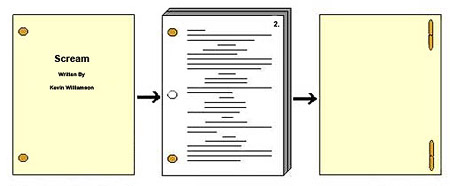
Another thing to keep in mind is that of all the stages of the filmmaking process, writing is easily one of the least expensive. As they say, time is money. This is often a result of rental fees for equipment, payment for cast and crew (if you choose to pay your cast and crew), electric for lighting, etc. Literally the only things you pay for during the writing process are paper and ink. Maybe copies at Kinkos and those fancy brass fasteners as well. Furthermore, any plot holes or bad dialogue that you don’t notice till you start shooting is just going to take up time that you’re now paying for. Since your time is not costing you anything during the writing process, you might as well take as much as you can now before it becomes a valuable commodity.
Fasten only the top and bottom. The empty hole in the middle is where a piece of your soul goes.
I’m sure many of you might be asking what makes a structurally sound script? I’d love to get into it, but quite frankly I don’t feel like testing the character limits WordPress allows on a single post. Plus, there are far more skilled writers than myself who have dedicated their lives to teaching screenwriting. As it so happens, I know a few popular ones that I would suggest any budding filmmaker read before they attempt to write their next film.
Anything from Syd Field is good. I particularly like The Screenwriter’s Workbook. Another book I would recommend is The Screenwriter’s Bible by David Trottier. Finally, although I haven’t read it myself, many people swear by is Save the Cat by Blake Snyder.
Believe it or not, after you get the hang of screenwriting it can become a very fun and rewarding experience. I can tell you that nothing beats the feeling of completing that first draft or knowing that you wrote a truly great scene. Not to sound grandiose, but writing is as close as having godlike powers as you can get. No other profession I can think of allows you to create unique people with their own voice and experiences, and allows you to do whatever you want with them. Reward them, hurt them, give them riches or outright kill them, the choice is yours. Furthermore, a good script will excite the rest of your cast and crew. Believe me, nothing makes an actor drool like a good character written well. With this in mind, why would any filmmaker choose to rush through the writing process?
For my first interview I really wanted to cover someone I felt really embodied the type of filmmaker I want to speak to. Someone who’s just starting his film career, but knows exactly what direction he’s headed. I couldn’t have asked for a more representative and entertaining subject than Cody Everett.
His directorial debut, “The Greatest Lie Ever Told“, which he also wrote, premiered at this year’s Phoenix Comicon. It was also an official selection at the 2014 Jerome Film Festival. He was also a producer on the short horror film Dust Jacket.
You can watch “The Greatest Lie Ever Told” on YouTube or make your life easy and click play on the embedded video above.
Friendly Neighborhood Filmmaking: Why did you get into film?
Cody Everett: That’s actually a really good question, because I never really thought about why I did it, I just always wanted to do it. I mean, part of the reason was to prove that I could, to the group of people I make movies with. That was the [biggest] part of it, to say, “No look, I can do it too,” because I didn’t think I was taken seriously. That was the main reason. I’ve always enjoyed movies from an early age. It’s fun for me to do. I love working on a set. At first, I wanted to be an actor in high school. Then I wanted to learn both sides and I just kind of gravitated more towards telling people how to act, because I was better at picking out shitty acting than I was at acting.
[A smile creeps across his face]
I wouldn’t mind being, what’s his name, Renny Harlin.
FNF: Who?
CE: The guy who’s directed everything. He directed Die Hard 2 and Cliffhanger. Also one of the Exorcist sequels, one of the newer ones. This guy, he did one action movie and people were like, “Fuck it, he can do it. He does everything!” He did a horror movie and now he’s doing all this other shit, but no one knows it’s him because he’s not a great director, but he works.
FNF: Are you saying Harlan’s an influence or just, “Well, if he can do it…”
CE: It’s kind of both. [laughs] I mean, [Hollywood] will throw anything at him. He’s made a career at making mediocre movies. His claim to fame is he made the worst Die Hard.
FNF: I wouldn’t say that, have you seen the new one? With the son?
CE: True.
FNF: Unfortunately, that guy had to wait twenty years for Hollywood to make a worse Die Hard than number two.
CE: You know Renny Harlan was just sitting there, hands clenched, saying, “Please suck.”
FNF: Well, other than Renny Harlin, did you have any other influences?
CE: I’m mostly influenced by comedy. My mom was really into old movies. I grew up with Jerry Lewis, the Three Stooges, The Carol Burnett Show, but also Dean Martin, straight men like that. I’ve always like over the top physical comedy. That’s where my humor started. I found humor as a way to deal with things and situations in life. If you can make a shitty situation in life funny, it doesn’t seem so shitty. I feel I went through some weird film stages, but also some of the same film stages as everyone else. As a kid I was always drawn toward the darker, macabre stuff. It started out with what I call Baby Macabre, Tim Burton stuff, but then I started watching Troma stuff, which is weird because Troma had always been in my life.
FNF: Yeah?
CE: Yeah, I remember my dad taking me to the grocery store, back when you would rent movies from the grocery store, and they had me pick out a movie. Toxic Avenger had a cartoon on at the time and they let me rent Toxic Avenger 3, the one where he fights Satan. I got that one, where he knocks Satan’s head off, there are tits in it, all this crazy stuff. Total B movie. I watched it by myself, because [my parents] thought it was a kid’s movie. They just popped it in, like it was the babysitter. I watch that movie still to this day, and it’s like, “A kid should not be watching this!” I was eight years old. It’s weird, [Troma] was my phase through high school as well. I got into the kind of grunge way of filmmaking by watching those movies. [Troma] kind of said, “Alright, well make your own damn movie.” I would read or watch whatever I could from Troma. A few are some of the worst movies you’ll ever see, but I like a lot of terrible movies. There are people that will think certain movies are just god-awful and I’ll love them. I want to be the Uwe Boll of America.
FNF: Really?
No, I’m kidding, I want to be Renny Harlin. [laughs]
FNF: Tell me about the first film you worked on. “Return of Mothra”?
CE: Yeah, “Return of Mothra” was a high school film. It was a remake with Chris Wilembrect. The story was pretty cohesive. We had this moth we made in ceramics class and we had it attacking this Matchbox car. It was stupid, but we put it into the Phoenix Film Festival. It was just this stupid comedy, but we got a letter back saying “Return of Mothra” got in.
FNF: What year was this?
CE: 2003.
FNF: So you were, what, seventeen, eighteen?
CE: Yeah, something like that.
FNF: Wow, and you got a film into a film festival. What was that experience like?
CE: It was weird. It was the high school portion of it, so no one gave a shit, but I met Brian O’Halloran there from Clerks who was amazingly nice. John Waters was also there, who Chris was a big fan of, so that was the big thing to do. We have to go see John Waters!
FNF: So why did you pick “The Greatest Lie Ever Told”? What spoke to you about this film made you decide to make it your directorial debut?
CE: My goal was not to be a director. I didn’t feel I was that far advanced yet. I was trying to find a way to get respect from the group of people I work with. I felt I had to do something, so they could say, “Ok, he’s done it before. I’ll listen to him.” I mean, just because someone hasn’t done something before doesn’t mean their ideas are bad.
FNF: Agreed.
CE: Eventually I decided [directing] would make me a better producer, which is what I really wanted to be. So I was thinking, “What can I do that’s kind of easy?” I see everybody do these overcomplicated short films. I just wanted to do something easy, to show these guys I could do it. I was going to write this story about a father that shows up on his son’s doorstep. The son hasn’t seen him in years, but the father is expecting him to take him in. I was going to try and make it a comedy…
FNF: That’s pretty heavy for a comedy.
CE: [laughs] Yeah. So I did this Google search, like, “Ten Things A Drunk Father Would Say” and what came up was a list of things not to do in front of your significant other and I said, “That’s a movie.” I don’t why that clicked with me, but I knew that was the movie. It just fit perfectly. It was easy. I could shoot it at my friend’s house. I had to get a restaurant, but it was [just] two locations. My goal was to make, what I consider, a commercial film. A commercial comedy that you would go and see Seth Rogen in at Harkins, but do it in five minutes, and I did that. I know I did that.
FNF: So since this was your first time on set as a director, what was that like?
CE: I felt a little nervous with the time restraint. The first half of the night, the restaurant shoot, I bullshitted my way through that just trying to figure out what my style would be. What am I going to say to the actors? What do I want them to say? Kind of figuring all that out. Once I got through that portion of it, it was pretty easy going from there. Having fun was important, but also knowing when to work was important and having a great crew was important. I had all that, so it wasn’t hard. But, if you ask the crew, they’ll probably tell you it was the best catering they ever had.
FNF: Do you feel there was any mistakes that, if you could do it again, you would’ve rectified?
CE: Oh yeah. Taking time, not rushing so much. Being quicker on reshoots. Time restraints, learning not to try and shoot everything in one night so you can get the best out of your actors, so they’re not so tired and ready to kill themselves. But also getting them tired and ready to kill themselves is great for some [scenes]. The editing process was a huge learning experience. We had three or four final cuts of that film. Also, how important it is to have good makeup people, because they saved our ass a lot on that movie. I feel it was more experience stuff and feel of things, rather than, “Oh hey, I learned this real technical shot. Learned this perfect angle.” I really hadn’t learned any of that stuff, but the feel of a set, how to run a set, getting a feel for the actors, yeah. Were there a lot of things I’d change? Yeah, but I didn’t have the budget.
FNF: Are there any tips you’d like to give to any other first time filmmakers?
CE: Tons. First, be like Renny Harlin. Set yourself to a mediocre level, but crush that mediocre level. [laughs]
No, there is one problem I’ve noticed with short films. Everyone tries to be a superstar on their first short film. Look, if you’re independent you probably don’t have the budget. You’re probably not going to have [the best] script because you can’t afford a great scriptwriter writing it for you. Simple can be hard to do, but there’s a reason simple is hard to do, because it’s probably going to be your best shit. Sometimes I see films and say, “Man, if you hadn’t tried so hard [to capture something big], you would’ve knocked it out of the park.”
FNF: Exactly, I just covered a filmmaker that said something very similar. That there are many beginning filmmakers that try to capture a big idea they know nothing about.
CE: Right.
FNF: Like someone doing a film about being fifty when they’re twenty-one. What can you know about that?
CE: Exactly. What do I know about being thirty? Everything in my film is somewhat grounded in reality. Yes, one day you’ll have to take a drunk girl home who’ll just ruin your whole day. That will happen. It’s all very relatable stuff. That’s what I mean when I say it’s a mainstream comedy. Then again, you’re always going to get that guy that says, “Oh, film is not meant for dick and fart jokes.” Fuck that, it’s meant to make somebody feel something. I mean, one of the biggest genres is comedy. When the market crashed, people went to the movies because life sucked so bad. Personally I didn’t go and see Twelve Years a Slave. Why, because sometimes I don’t feel like going to the movies and crying my eyes out because white people are so terrible. Don’t get me wrong there’s a place for that shit, but it’s not my shit.







 Friendly Neighborhood Filmmaking