We’re continuing our Spotlight of holiday themed shorts with a short film from Belgium, which was nominated for an Oscar in 2008. “Tanghi Argentini” or “Argentine Tango” is a film directed by Guy Thys and written by Geert Verbanck, that tells the story of André, a middle aged office worker, who makes the age old mistake of lying on an online dating site to impress a girl. When André strikes a date with a Tango aficionado, he must convince Franz, a co-worker who’s the cross between Ebenezer Scrooge and Yul Brenner, to school him in the art of dance.
The first thing you might notice about the film is the muted color palette. Blacks, greys, and whites dominate most of the scenery. Very rarely do we get a green from a Christmas tree in the background or yellow from the sun shining through a distant window. This seems to highlight the drab and boring existence that is André’s life. Even Franz, who is supposed to be sparking the passion in him, is dressed like he’s going to a funeral most of the film. The first time we really ever see a noticeable change is when André shows up to his date wearing a red rose in his lapel.
This is all very deliberate, as we are finally introduced to André’s date, Suzanne, in a striking red dress and sultry lipstick. This sudden injection is a great example of how color can be used as a kind of subtext in film. In this case, red can be representing André’s passion, as it has finally begun to flourish with his learning the Tango. Suzanne, on the other hand, is practically brimming with it, as she represents André’s escape from his colorless life.
Something else to note is the lighting. “Tanghi Argentini” is lit very similar to a film noir, with dim lights casting hard shadows. This gives an air of mystery to the film, possibly suggesting that not everything is as it seems.
Like many good shorts, “Tanghi Argentini” does take an unexpected twist, the kind that will have you going back to the beginning asking, “How did I miss that?” As good as the story is, I think the best thing to take away from the film is how Thys uses lighting and color to visually guide us through the story. This has been used to much effect in films such as Shindler’s List and The Sixth Sense. Filmmakers should take note on how “Tanghi Argentini” again proves how good cinematography can be used to tell a story just as dialogue can.
This week JJ Abrams released the teaser trailer for Star Wars VII: The Force Awakens and just like every other fanboy I watched the video over and over, often pausing to pick out even the most minute details. My dissection of the trailer was handled with the same level of precision as a group of Spaceballs with an giant fine-tooth comb. I mean this is JJ Abrams we’re talking about here. The guy who made Lost. Do you know how many Easter Eggs he snuck into that series?
Of course I wasn’t the only person with their eye on the trailer and it didn’t take long before people shared their discoveries and doubts to social media. It took no less than ten frames before some members of the Star Wars fan base had a collective head burst. The scene I’m talking about is the one that opens the trailer, where we see a stormtrooper with his helmet off, looking out into the distance with fear in his eyes.
Oh yeah, and he’s black.
The amount of outrage over this stormtrooper’s race has been well documented over Twitter and other social media outlets under the hashtag #blackstormtrooper. Although most is overwhelmingly positive, some try and point out the supposed “inconsistency” of his race due to the fact that stormtroopers were shown to be cloned from Jango Fett in Star Wars Episode II: Attack of the Clones:
Still others believe this is an attempt to appease the “PC lovers”, “Social Justice Warriors” or whatever other term kids are using these days to describe people who want to see women and minorities in films because they exist in a place we call society, just a small subset of the universe:
Anybody notice how JJ Abrams immediately checks the diversity boxes in the teaser for the new Star Wars movie?
How this is still an issue is beyond me, although I’m sad to say I’m not surprised. I was under the assumption that science fiction had moved beyond this nonsense decades ago. Duane Jones was cast in a starring role in a major Horror/Sci-Fi film in George A. Romero’s Night of the Living Dead. That was in 1968, the same year Kirk kissed Uhura. Also, I don’t remember anyone accusing George Lucas of checking “diversity boxes” when he cast Samuel L. Jackson as Mace Windu in 1999. It’s 2014, a black stormtrooper shouldn’t be considered progress or pandering, it should be considered the norm.
That’s not to say the scene doesn’t mark a historic moment in the series. Go back and take a look at that scene.
There is definitely something striking and out of place about this stormtrooper that has nothing to do with the color of his skin.
Look again.
It’s his expression, or better yet, the fact that he has an expression at all. Provided this is truly an Imperial Stormtrooper, JJ Abrams has done something that has never been done in the Star Wars universe. He’s humanized a stormtrooper.
Stormtroopers have traditionally been portrayed as a cookie cutter military outfit. Their uniforms are monochrome, without any semblance of coloring. No personalization, like stickers. No nametags. Their appearance is skeletal, the most stripped down our bodies can be while still maintaining their shape. Their voices are monotone, devoid of any kind of inflection. Even when they’re introduced as Jango clones, they are portrayed as mindless copies unlike the strong-willed Fett. For all intents and purposes, stormtroopers are meant to be mindless automatons, lacking any modicum of emotion or marksmanship.
There’s a reason for this in filmmaking, particularly Science Fiction, Horror and even some War and Western films. Things like zombies, robots, ninjas, orcs, brood-like aliens and the like are meant to be devoid of any humanizing features. This is so heroes can easily shoot and slash through swaths of enemies without eliciting an emotional response from audiences. It’s what differentiates Starship Troopers from becoming the sniper scene in Full Metal Jacket.
This method is used to great effect in the Star Wars franchise as the Empire is often depicted as masked or cloaked in battle, but the Rebels’ faces are exposed and possess features that make them unique. As an example take the first assault on the Death Star. On one side you have the the Imperial TIE Fighter Pilots, completely concealed in black helmets. Yet all the rebel pilots, from Wedge Antilles to my favorite, the portly Jek Tono Porkins, have their faces visible.
During the battle, no one cares as TIE fighters are blasted into particles, because they might as well be piloted by Death incarnate. But audiences feel for guys like Porkins as we witness him meet an untimely death as he sizzles (heh) among the stars. Porkins speaks with authority, we can tell he’s respected among his squadron and he sports a rocking neck beard. And for those of you wondering, yes, Lucas really named the heavy guy Porkins. (This was just to illustrate that Lucas humanizes his characters, not that he’s good at it.)
It’ll be interesting to see if Abrams is planning on giving the Empire a human side. It’ll certainly change the way we look at the Empire as well as explain the motivations of those within their ranks. Furthermore, it might reveal that there’s more than one side of the story when it comes to the battle between the Galactic Empire and the Rebel Alliance. Perhaps like most rebellions the outcome didn’t turn out as planned.
Whether you love them or hate them, one thing’s for sure, holidays are right around the corner and there’s nothing you can do to stop them. For the next month leading up to Christmas I’ll be spotlighting select holiday themed shorts for your viewing pleasure. For our first freakishly festive film I give you “Dark Times”, directed by Peter Horn and Jared Marshall, a tight five-minute short shot completely in the first person.
The directors’ choice to shoot POV gives this film a feel like being on a Disneyland ride. Try to imagine Star Tours set in a zombie apocalypse during Christmas time and you’ll get a good idea of what I’m talking about. The tight running time combined with the shaky cam really amp up the pace of this film.
Another interesting aspect of the film is how quickly we’re thrust into the action. There is no introduction of characters. The film simply doesn’t have time for it. We follow a man, we can only assume is a friend of ours, through a dark forest evading the undead and the like. As we continue through the mayhem that ensues, we are introduced to other zombie apocalypse tropes we have come to expect from the genre. The filmmakers even spare us the end credits as if to protect us from anything that might bog down the fast pace of the film.
An interesting thing happens about halfway through the film that changes the mood and pacing. I won’t give it away, but watch how Horn and Marshall play with our perspective by use of color and camera movement. Those familiar to first person gaming will recognize some of the tricks the directors use, which lead me to believe that Horn and Marshall have probably played their fair share of Call of Duty. Really, this could make a pretty good video game trailer.
Those of you looking to pick up some tips on pacing should give this one a view. “Dark Times” relies on zombie fandom and knowledge of the genre to tell most of the story for us. What’s left is an interesting study on the many ways POV can be used in film.
This week I really wanted to do a genre focus leading up to my first interview. Since the filmmaker I’ll be interviewing specializes primarily on comedy, we’ll be spotlighting a rather ingenious little comedy short entitled “Somebody“, which premiered last month at the Venice Film Festival.
Directed by filmmaker Miranda July, this film is rather unique in that it promotes a real life app called Somebody. The app allows one user to text another user within the vicinity of somebody they wish to tell something to, but don’t have the courage to say to them face to face. It works not unlike Tinder, but rather than searching for booty calls, it searches for brave individuals who can approach complete strangers and relay messages of a personal nature without the emotional disconnection associated with mere texting.
The film is not exactly a commercial, but an actual comedic short that shows the app in action. It’s seems pretty clear from the tone of the film that July is focused less on promoting the app than she is with pointing out the direction society is headed in a world where social interactions are becoming more and more digitized. This appears to be more of a mock social experiment, exploring a world where communication via social media is becoming increasingly dominant over the old school method of personal interaction.
As a film, “Somebody“ really shines in the area of casting. The actors really do look like anyone you’d find off the streets; complete with the type of diversity we’ve come to expect walking the streets of a big city. This is used to a comedic effect as users of the app selectively choose the most unlikely participants to relay their heartfelt and/or heartbreaking messages to their recipients. This is very apparent in the first scene where we see a small, lanky hipster being “broken up” with a large, bearded man wearing a tracksuit complete with consoling hug.
The film also uses a familiar technique from films like Timecode by showing actors from the previous scene walk past or show up in later scenes to show that each experience is connected. This has a different effect in “Somebody”, as it introduces us to a world where this app has become a standard communication tool that everybody is using. This is also apparent in the way the rest of the world reacts to the app’s users, oftentimes without any surprise, as if usage of the app has become an everyday occurrence.
July’s method of promoting this film as a package deal of sorts is rather creative. It’s possible that she’s making yet another comment of modern day society by suggesting that promoting a short film requires more than just old fashion word of mouth. In an age where new technology is just as highly looked forward to and hyped up as summer blockbuster films, perhaps July is suggesting that in this day in age media and art need to be a combined to have any chance at getting noticed in a culture that has become oversaturated. Either way, it’s an interesting approach to advertising and I look forward to see its effects.
This week I really wanted to focus on cinematography in film and how nailing it effectively can add to the production value of a film without necessarily adding to the budget. Although having a top of the line HD camera and a large budget certainly will increase the look of a film, I’m always impressed by filmmakers that do a lot with fairly little by taking the time to study shot selections and how they translate to an audience visually. I was lucky to find a short last night called “Factory 293” that’s a fantastic example of this.
“Factory 293” is a period piece written and directed by Roderick MacKay. Set in WWII during the Nazi invasion of the Soviet Union, it follows a factory in the middle of the Russian tundra that produces artillery shells for tanks, really big guns or Soviet era Jaegers specifically designed to take on Nazi Kaiju (how the hell am I supposed to know, I’m not an artillery expert). Grigori runs the factory and is having an affair with Yelena, a factory worker. From the outset we know that something is clearly bothering Grigori. He rejects Yelena’s advances and glares menacingly at the picture of Stalin hanging on his wall.
When the power goes out, Yelena is charged with turning it back on. In the attempt to restore power, she finds a lone soviet soldier out in the tundra on the brink of freezing to death. From there we learn more about Grigori, the mysterious soldier and the extent of Yelena and Grigori’s relationship.
I think the most surprising thing about this film is that it’s shot far, far away from the frostbitten lands of Russia in sunny Perth, Australia. Even more impressive, is that despite clearly looking like it took place on the planet Hoth, it was shot in the middle of summer. Through the use of fans, fake snow and some incredibly impressive green screening and digital artistry, they managed to turn Perth into something out of Kris Kringle’s nightmares. All this was done within a relatively small budget estimated at $100,000 dollars.
For those of you interested in the process of how MacKay managed to pull this off, it’s chronicled in a Behind the Scenes video below:
Despite the impressive digital work in the movie, what really struck me was the choice of shots MacKay went with to tell his story. One specific shot is an overhead angle capturing the portrait of Stalin ominously overhead of Grigori. The shot hints to the ever-looming presence of Stalinist Russia, mimicking the paranoia the dictator was so well-known for, his eyes constantly on the lookout for dissenters to the Soviet cause.
MacKay also does some impressive work with camera focus, specifically while shooting down the barrel of a gun, many of the shots seemingly coming from the point of view of the targets.
All of this excellent cinematography enhances the film further, giving it a very polished look for, relatively, pennies on the dollar. This demonstrates what good shot selection can do for a film, drawing the audience further into the film by making the framing and movement of the camera just as much a part of the storytelling process as the dialogue spoken by the characters. This is a lesson I feel a lot of beginning filmmakers can learn greatly from, that camera position is more than a matter of just getting the actors in frame. Let’s not forget that films are moving pictures and not just a collection of static shots.
Kristen Wiig, Steve Carell, Rashida Jones, Will Forte, Adam Scott. You probably recognize these actors from SNL or other prime time comedy shows like Parks and Recreation or The Office. Although these comedians are most known for their roles in some of the most popular comedy shows on TV, what are they up to when those shows are off-season? Some of you might be saying, “Uh, big comedy movies, like Anchorman 2 and wasn’t Adam Scott in that Walter Mitty movie where Ben Stiller skateboards cross-country with a really tan Sean Penn or something? Oh, and wasn’t Rashida Jones in, like, eight romantic comedies with Paul Rudd…”. Well, yeah, ok, a lot of the films these actors have been in are big time Hollywood comedies, but dammit this blog is about indie filmmaking (most times) so we’re going to stick to that theme. Plus, a little searching and you’ll find that these actors aren’t all chuckles and laughs for big paychecks.
I recently came across a great film starring Adam Scott called The Vicious Kind. In it, Scott plays a character far removed from his lovable, geeky, tabletop game playing character from Parks and Rec. Instead, we find a fast-talking, depressed asshole, brilliantly played with a seething anger, which makes you love and hate him all at the same time. Although I have always respected Scott’s acting ability from Parks and the Starz original show Party Down, this was a complete departure from these roles.
Adam Scott’s other talent? Wearing a suit like a champ.
This caused me to look up other films similar to The Vicious Kind courtesy of Netflix’s surprisingly reliable aggregate system. This led me to Take this Waltz a drama about infidelity where Seth Rogen plays a husband whose wife cheats on him. Although there are some comedic moments in his performance, he mostly plays it straight as a man unable to communicate to his wife that their marriage may be in turmoil. Sarah Silverman is also in this film as a recovering alcoholic who has a scene-stealing moment towards the end of the film. Just like Rogen there are moments of comedy in her performance, but for the most part she plays the part of a women struggling with addiction, conscious of the risk of self-destruction.
Any of you who may have seen Celeste and Jesse Forever may have seen Rashida Jones play opposite Andy Samburg in this dramedy about two people who break up and attempt to continue their friendship. Through most of the film, Jones plays Celeste with a underplayed sadness at learning that Jesse has moved on and found someone new. Not only does Jones bring a more dramatic performance than we are used to seeing her in, but she also co-wrote the film.
The most notable example of this new trend I feel has to be that of Will Forte. Everyone probably remembers him as an SNL regular for a decade, but his recent work in last year’s Alexander Payne directed film Nebraska earned him an Independent Spirit Award for Best Supporting Actor. Nebraska is a fantastic drama made all the better by Forte’s performance as a son trying to reconnect with his ailing father played by the incomparable Bruce Dern.
Bruce Dern looks absolutely fantastic for 78.
Perhaps it’s the fact that a lot of these actors come cheaper, but possess their own fan base from their respective comedic roles. I don’t think there is much argument that TV is in a sort of Golden Age. Many popular shows command the same amount of production value as some Hollywood pictures nowadays. As a result, more people are becoming TVaphiles and many of the shows we see on the small screen have huge followings. You may remember that while back in the day popular comedians from SNL would immediately move into long-lasting film careers, shows like 30 Rock, Parks and Rec and Brooklyn 99 have shown us that many are now flocking to TV to further their careers. The combination of these two points could certainly account for the demand to fill independent movies with these types of actors. Not only are you getting actors equipped with an already large fan base, but also as many of these indie films have shown us, these comedians have the chops to take on more dramatic roles.
Personally as a fan of sketch comedy shows like SNL and standup comedy in general, I hope to see this trend continue. Nothing entertains me more than seeing an actor or comedian play against type and surprise me with hidden talent that they may otherwise not get to showcase in their respective fortes.
“Death to the Tinman” is a short film I found a few years ago. It’s directed by Ray Tintori and premiered at the Sundance Film Festival in 2007 where it won the short filmmaking award. It was his senior film at Wesleyan University. Since then Tintori has gone on to direct several music videos for several bands such as MGMT and The Killers.
On its surface it’s a simple tale of love and loss, but it also deals with more complex issues such as religion and intolerance. As the title would suggest, it draws its influence from the Wizard of Oz books by L. Frank Baum. It’s a good example of using a well-known story, old enough to be in public domain, and expanding upon it.
The black and white cinematography gives it an old 1930’s Universal monster movie feel to it. Although I don’t have any information on the type of budget he was working with, I have to imagine it wasn’t much. Although the film has a period feel to it, the costumes are more modern day, some so simplistic that they look like they came from a Party City. Sometimes it looks like it could pass for something Ed Wood would have put together. Even the Tinman’s suit looks like it was pieced together with old trashcans.
The look of “Death to the Tinman” is something I believe beginning filmmakers can learn from. It’s a great example of a film that substitutes expensive set pieces and costumes with a whole lot of character. When dealing with stories that seem to require extravagant production values, purposely giving it a super low budget, almost duct taped together feel can give it a quirky, childlike mood provided you have a strong story to back it up.
Tintori says that he was influenced by the likes of Werner Hertzog. Tintori had this to say about his contemporary,
“The Herzog thing was also about not being afraid to do enormously complicated stuff: Shooting with an airplane that we built that we were trying to fly all the time. He’s just extremely brave physically, and (this was) a film a that would be physically exhausting to make because you were out in the real world trudging around in a snowstorm or in swamps or something like that.”
He also lists Spike Jonze as an influence, which I think is a little more apparent.
Tintori notes that since he made the film while he was in college, he tried to stick to familiar territory. This is good advice for beginning filmmakers that might try to wow audiences with their first film by tackling complicated subjects that may be out of their realm of experience. Sticking to what you know before culminating strong research habits can allow filmmakers to put out quality work that comes from the heart. Kevin Smith is a great example of someone who has benefitted from this, making his first film Clerks about his experiences working in a convenience store.
Tintori gives what I thin is his best piece of advice on this subject,
“Yeah, I think that sometimes young filmmakers feel like they need to prove themselves by tackling issues that are really older people’s stories. So you end up getting these festivals with a ton of films by really young kids trying to tell stories about middle-aged people going through traumatic, angst-ridden moments in their life, but you get the feeling that the filmmakers actually have no first-hand knowledge of living through any of those things. So while they’re trying to be truthful, it ends up ringing very false. I recently taught a class at the University of Virginia and one of the things I said to the students was to recognize their own level of immaturity and try to make films that knowingly operate on that level.”
What the hell is an indie film anyway? For some, the first things that come to mind are small crews, low budgets and none of those pesky producers in sharkskin suits.
Apparently this is not altogether accurate. Turns out, my whole concept of what I thought constituted “indie” was skewed as well. “Indie” and “low budget” are two terms that are often thought of being naturally intertwined but in reality are mutually exclusive. For a film to be defined as independent it needs to be wholly self funded or only partially funded by a “Non-Hollywood” entity. That doesn’t necessarily mean you have to have a small budget. If Bill Gates decides he wants to invest 150 million in a film, well he just made a film every bit as indie as El Mariachi.
As a little change of pace, I figured we’d go on a somewhat comedic foray into the world of big budget indie films. So I present to you a list of indie films masquerading as big Hollywood productions.
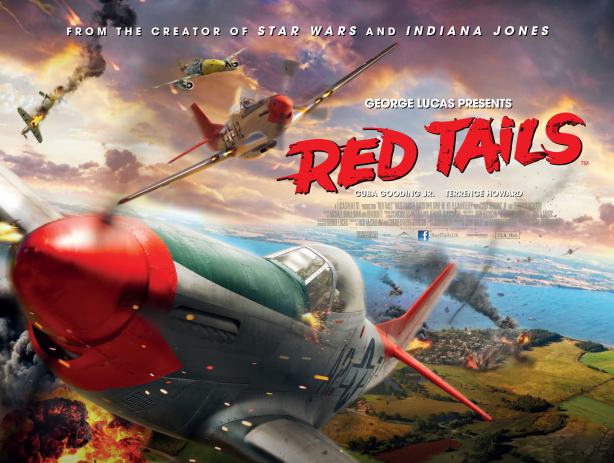
Red Tails
George Lucas actually started developing this film in 1988 probably planning to glue propellers on to old X-Wing models. Instead, this 2012 film was halted because Hollywood apparently thought there weren’t enough white people in the Tuskegee airmen. So Lucas waited till the day he could sell enough Ewok figurines to afford his own damn company.
Lucas covered the cost of the $58 million production with his own money and even threw a few million in for distribution. Red Tails ended up taking a hit at the box office, which probably didn’t even faze Lucas when he ended up selling Lucasfilm to Disney for the price of a small country.
District 9
Some of you might remember that this was supposed to be the Halo movie. Just as in one of Kevin Smith’s fantasies, it’s possible there might be an ongoing battle between George Lucas and Peter Jackson to see who might have the greatest sci-fi/fantasy trilogy of all time. Needless to say, this type of reputation has given Jackson abilities that surpass that of any of Tolkien’s wizards. With the wave of a hand, Jackson can charm independent financers to throw millions of dollars at any project within his realm of influence.
QED International agreed to foot the $30 million budget for this film. District 9 would prove to be a success, taking in a whopping $210 million at the box office, crushing Lucas’s attempt to dethrone Jackson in the Great Battle of Side Projects of 2012.
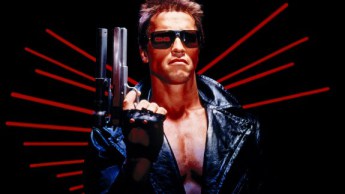
The Terminator
Sometime in the early 80’s, a man by the name of Oividio G. Assonitis made a series of mistakes. The first was to resurrect the Roger Corman produced film Piranha. The second was to take up screenwriting and pen Piranha 2:The Spawning. Finally, he decided to try and harness the power of a first time director by the name of James Cameron. The sheer suckage of Piranha 2 would push this force of nature beyond its limits, causing Cameron to fall ill. Bedridden, Cameron dreamed of the day when robots, disguised as humans, would go back in time to put him out of his misery and avoid the cataclysmic possibility of Piranha 3 from ever being made. Upon awaking, Cameron realized the film gods were sending him a message, one that had to be shared with the world.
Like all prophets, Cameron was laughed at. Hollywood wanted nothing to do with The Terminator. Cameron’s agent even begged him to abandon the film. Cameron found his lack of faith… disturbing. Virtually broke, Cameron dug beneath the cushions of the couch he was sleeping on and sold The Terminator for $1, with the promise that he would be able to direct. The investment would prove to be a lucrative one. The Terminator would later be passed on to independent studio Hemdale Pictures, which financed the film for $6.5 million, raking in $78 million at the box office.
Teenage Mutant Ninja Turtles (1990)
Long before Michael Bay began scouring the aisles of Toys R Us for film ideas, children everywhere couldn’t get enough of the Teenage Mutant Ninja Turtles. The next 5 years would prove to be parents very own ninth ring of hell as children everywhere began to speak in surfer accents while beating their little sisters with old toilet paper rolls tied together with grandma’s yarn. Such popularity made the idea of a feature film a no brainer.
You would think that Hollywood would have bought the rights to the Turtles in a heartbeat, but instead Teenage Mutant Ninja Turtles was made independently for the low, low price of $13 million, much of which probably went to the Muppet masters over at Jim Henson’s Creature Shop. In the end Teenage Mutant Ninja Turtles would end up taking in a colossal $210 million at the box office, spawning two sequels as well as a creepy rock tour that would solidify Pizza Hut as the leading cause of child obesity for years to come.
Most of my favorite films are social commentary films that are presented in unlikely genres. For instance, I absolutely love Stanley Kubrick’s Dr. Strangelove because it addresses the very serious issue of nuclear warfare, but frames it in the form of a comedy. The film succeeds on so many levels, in part because you have the likes of Peter Sellers, arguably the greatest comedic actor of all time, playing multiple roles, but also because telling the story through comedy allows the audience to more easily digest a rather frightening reality.
“The Naturalist” is a short film I came across that also deals with a serious social commentary, but choses to do so within the confines of an unlikely genre. One would hope that the future portrayed in “The Naturalist” would never come to pass. In it, abnormalities of all sorts are shunned, homosexuality unfortunately being one of them. As our protagonist and his lover hide away from this oppressive world, a friend comes to visit to offer him a “cure” for his sexual orientation.
“The Naturalist” could have easily have been a drama set in present times. The concept of homosexuality being a “disease” to be cured could be paralleled to the current, atrocious practice of gay reparative therapy. Filmmaker Connor Hurley, instead, choses to go the sci-fi route, placing the film within a dystopian future.
This is something I feel all filmmakers can learn from. Just because you may want your film to deal with something like how your addiction to video games have caused your wife and children to resent you as a suitable father figure, doesn’t mean you have to reflect your life verbatim within an environment that’s similar to yours. Any setting or genre can be used to best communicate the moral of your story to the audience. The excellent sci-fi film Snowpiercer deals with class warfare by addressing it within a post-apocalyptic future aboard an eternally running locomotive. Dawn of the Dead is about consumerism. I’m sure the horror of the Holocaust could be addressed within a sword and sorcery fantasy provided it still deals with the core theme in a new and interesting way.
As you watch “The Naturalist”, pay close attention to how a modern day issue can be further explored within unlikely settings and genres. Perhaps this might inspire one of you burgeoning filmmakers to break though that writer’s block and discover the best way to address your next big idea.
Disclaimer: Film Rant is a section where I attempt to quickly vent my frustrations with new trends in film and TV in 400 words or less. It will most likely not be researched in any way and could very well be coming from a place of complete and utter ignorance. Nevertheless, I consider this a therapy of sorts and for the sake of my sanity these posts will pepper the blog from time to time. Also it should be noted that alcohol could, at times, be the main catalyst for some of these posts, so bare with me on the typos.
I’ve noticed a growing trend in movie trailers lately that’s been vexing me down to my soul. I’ll be chowing down on a salad (aka Spicy Cheez-its), watching The Daily Show, when a trailer for a ridiculous looking comedy will come on. I often won’t pay much notice because I’m a notorious multitasker, who commonly requires Facebook to be open while I eat and watch TV as I enjoy the triple penetration of comedy news, sloth videos and sustenance. But every so often I can’t help but listen to the wonderful “reviews” these films get, each from what I’m sure are well-respected Twitter handles.
Look, I’m not ignorant. I know that films have been fabricating reviews for a while now, but when did they decide to get so lazy? I imagined in the old days they would just throw a few bucks at some broke journalist or content writer and everyone was happy. But times, they have a chang-ed. It would appear audiences have either become more gullible, more indifferent, or simply so used to having smoke blown up their anus they simply don’t care whose puffing on the pipe.
“Kevin James is money in the bank I tells ya!”
As much as I’m sure @peterstarzgard racked his brain to answer that Magnolia question posed on IMDB, no matter how nuanced his response, are we really accepting nowadays that he’s a top authority on films? Or is it that people are far more accepting of the opinions of those on social media than I realized?
Maybe what I should be asking is “Where can I get my hands of some of that sweet tweet money? I mean I do have a blog now about film. Surely that counts for something. I think I can sit through Let’s be Cops if someone paid me. Better yet, why do I even have to see the movie? I can come up with something clever in 140 characters. “@letsbecops: Call 911, cause this movie is killin’ me!” or “It should be a crime if you miss this one. No. Seriously. Beaten and incarcerated without chance of parole. #mycatsmyonlyfriend.”
“Patton Oswald tweets back to everyone but ME!”
If any studios are interested, please email me at Freindlyneighborhoodfilm@gmail.com under the header Pimp my Pic. Don’t worry, I come real cheap.





 Friendly Neighborhood Filmmaking